
Business Travel Starts Long Before You Board the Plane
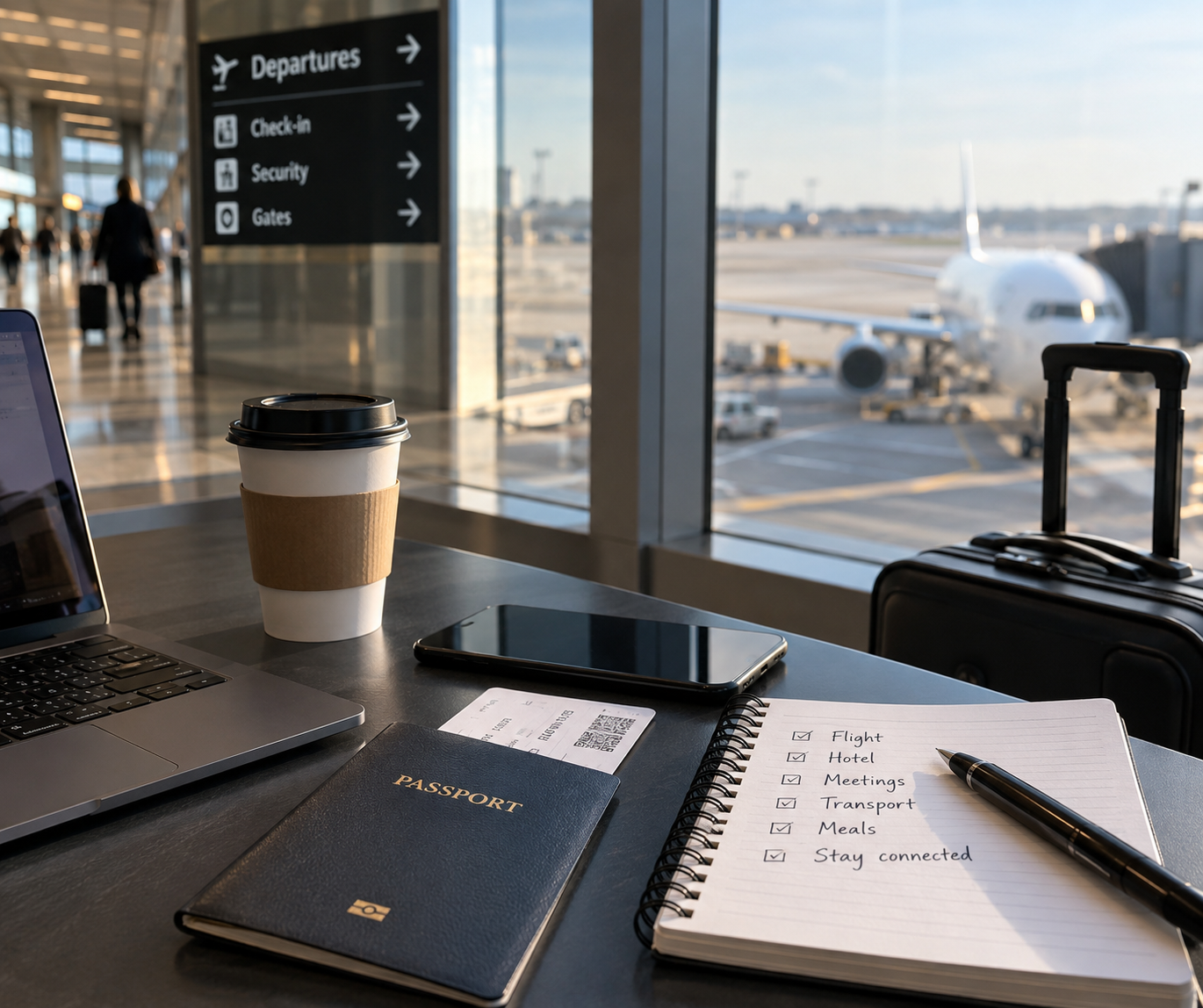
Recently, I was asked to organize a business trip abroad.
On the surface, it sounds simple: a flight, a hotel, meetings, and a transfer from the airport.
But when I manage a business trip, I don't look only at the bookings.
I look at the entire experience — from the moment the trip is planned until the traveler arrives back home.
My goal is simple: to make sure the traveler can focus on the reason they are traveling, rather than everything around it.
It Starts With the Bigger Picture
Before I choose a flight, I look at the overall schedule.
When is the first meeting?
Where is it located?
How long does it take to get there from the airport?
Are there additional meetings that day?
How much time should be left between meetings?
Only once I have the full picture do I choose the flight that works best for the trip.
Not necessarily the cheapest flight, and not necessarily the one that lands the earliest.
The one that makes the day work.
Before the Flight, We Also Take Care of What You Don't See in the Booking
Passport validity.
Entry requirements.
Whether a visa or travel authorization is required.
The right travel insurance.
A communication package or eSIM.
These things may not appear on a flight reservation, but they are an essential part of a well-organized business trip.
I prefer to have all of these checked and taken care of before the traveler leaves home, rather than turning them into problems that need to be solved along the way.
Getting From the Airport Is Part of the Trip Too
I check in advance what the most convenient way is to get from the airport to the hotel or the first meeting.
Is Uber or Bolt available?
Is there a reliable taxi service?
Would it be better to arrange a driver in advance?
And if Uber is the best option, for example, I don't want the traveler to have to search for the hotel's name as soon as they land.
The hotel's address can be ready to copy directly into the app.
Payment can be set up in advance.
The traveler knows which app to use and where to go.
A few small details, but exactly the kind of details that make arriving in a foreign country much easier.
The Hotel Is Chosen Around the Trip — Not Just the Hotel
A good hotel is only the starting point.
I look at the distance from the meeting locations, travel times during the relevant hours, and how convenient the hotel is in relation to the overall schedule.
But I also look beyond that.
What's around the hotel?
A good coffee shop for the morning.
A grocery store or convenience store.
A pharmacy.
A good restaurant within walking distance.
A comfortable place to sit and work with a laptop.
These are details that may never appear on the hotel's booking page, but they can make a significant difference to the overall stay.
Food Needs to Be Part of the Schedule Too
When the day is packed with meetings, lunch can't simply be "we'll figure it out."
I check where it makes sense to stop, how much time is available, and what's along the route.
Sometimes it's a good restaurant near the next meeting.
Sometimes it's something quicker.
The important thing is that the traveler doesn't find themselves at 4 PM, after a full day of meetings, realizing they haven't even had time to eat.
Dinner is part of the planning too.
Is it a personal evening?
Is there a client to host?
Should a table be booked in advance?
Or would it be better to leave the evening open?
There isn't one right answer.
There is what makes sense for that person and that particular trip.
And Then Comes the Really Important Part — Breathing Room
I don't like planning a business day where every minute is occupied.
If one meeting ends at 11:00 and the next starts at 11:15, it may look efficient.
But it doesn't really leave room for real life.
A meeting can run over.
Traffic can take longer than expected.
Someone might call.
You might simply want to stop for a coffee.
That's why I build in buffer time where it is actually needed.
To me, buffer time isn't wasted time.
It's part of the plan.
Because Every Small Task Requires Attention
In everyday life, finding a coffee shop takes a few minutes.
Ordering a taxi is simple.
Checking whether you need an eSIM can be done in the evening.
Looking up a hotel's address isn't a complicated task.
But when all these small things accumulate during a business trip, they create a different kind of burden.
Not necessarily a burden of time.
A burden of attention.
And that is exactly the resource I want to protect.
Time Is the Critical Resource
Ultimately, for me, a successful business trip isn't one where we simply managed to book everything.
It's one where the traveler can be 100% focused on the reason they traveled.
The meeting.
The client.
The deal.
The decision.
The important conversation.
Everything else should simply work in the background.
The flight should fit the schedule.
The hotel should fit the meetings.
Transportation should be clear.
Documents should be ready.
Connectivity should work.
Food should be planned.
And if something changes — there should be someone handling it.
This Is Exactly Where I See the Role of Ankora
I don't see my work as "booking a flight and a hotel."
I see it as end-to-end support that takes care of everything around the traveler.
Thinking ahead.
Checking.
Coordinating.
Preparing.
And making sure that even the small details are taken care of before they become something the traveler has to deal with.
Because when time is the critical resource, it's not enough to save minutes.
You also need to save the mental effort of having to think about those minutes.
And that, to me, is the true value of personal service.